
💻 Kernel Mode vs User Mode Explained (Simple Guide 2026)
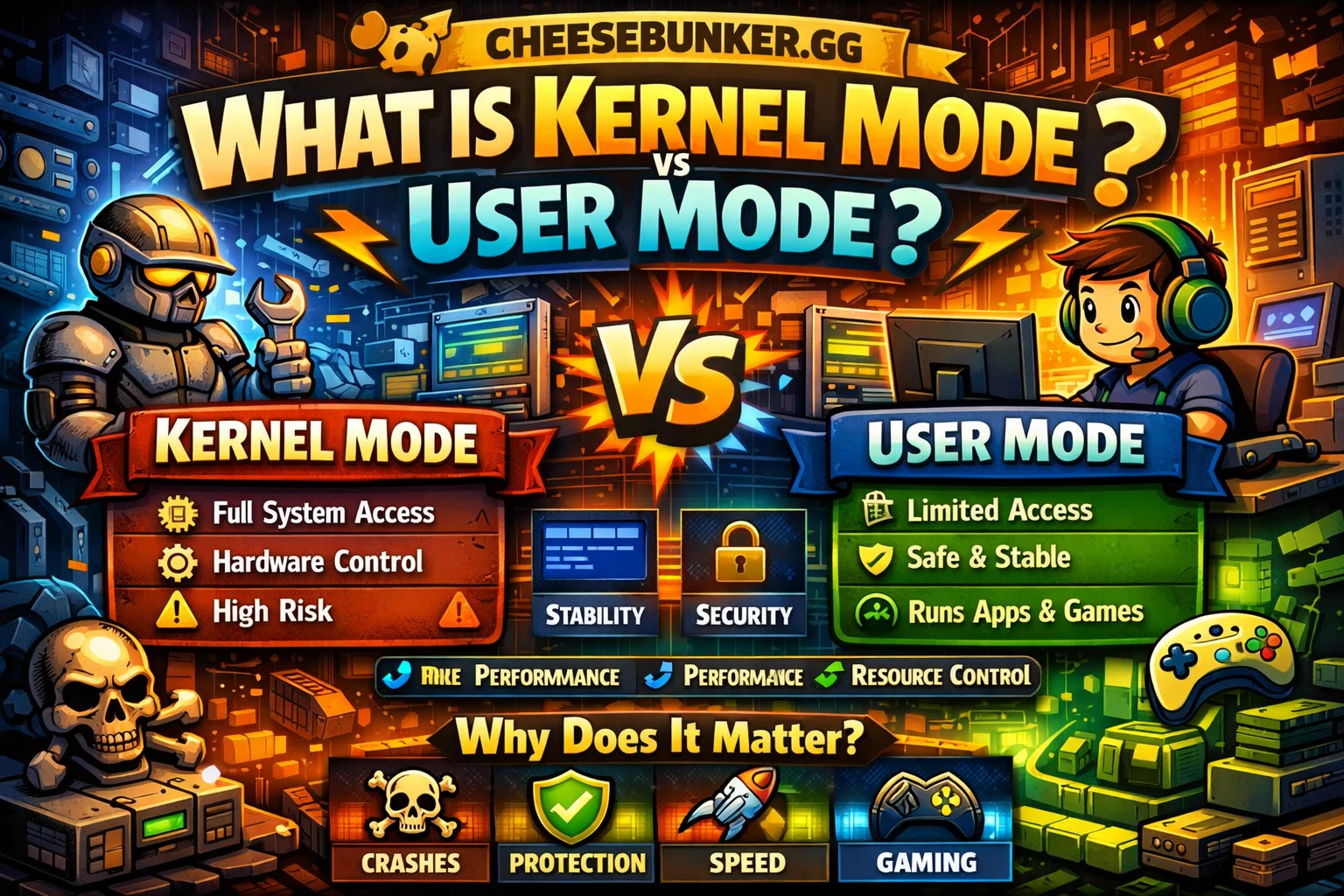
💻 What Is Kernel Mode vs User Mode?
Kernel mode and user mode are two fundamental concepts in how operating systems work. They control how software interacts with your computer’s hardware and system resources.
Understanding the difference between kernel mode vs user mode is important for:
- System stability
- Security
- Performance
- Software behavior
In this guide, we’ll break everything down in a simple way.
🧠 What Is User Mode?
User mode is the restricted environment where most applications run.
✔️ Key Features:
- Limited access to system resources
- Cannot directly interact with hardware
- Isolated from other applications
- Safer and more stable
👉 Examples of user mode programs:
- Games
- Browsers
- Discord
- Normal apps
🔒 Why User Mode Exists
User mode protects your system by preventing apps from:
- Accessing critical memory
- Interfering with other processes
- Crashing the entire system
👉 If a user mode app crashes, it usually does NOT crash your whole PC.
⚙️ What Is Kernel Mode?
Kernel mode is the highest privilege level in your system.
Think of it as:
👉 Full control over your PC
✔️ Key Features:
- Full access to hardware
- Direct control over memory
- Runs critical system components
- No restrictions like user mode
🔧 What Runs in Kernel Mode?
- Operating system core (kernel)
- Device drivers (keyboard, mouse, GPU)
- Memory management system
- Process scheduler
👉 These are essential for your PC to function properly.
🔄 Kernel Mode vs User Mode (Key Differences)Access Level Hardware Control Stability Risk Security Use Case 👉 SummaryKernel Mode = Power + Risk |
|---|
⚠️ Why Kernel Mode vs User Mode Matters
Understanding this difference is important because it affects:
🔹 System Stability
Kernel mode programs can crash your entire system (BSOD)
🔹 Security
User mode helps isolate apps and prevent system-level damage
🔹 Performance
Kernel mode allows deeper system interaction
🔹 Resource Management
The OS controls everything safely through these modes
🎮 How This Relates to Gaming & Software
Modern systems—especially in gaming—use both modes for different purposes.
- Most apps run in user mode
- Critical system-level operations run in kernel mode
Some advanced tools or software may operate closer to the system level.
Examples:
👉 https://cheesebunker.gg/product/spoofer-temp-v2
👉 https://cheesebunker.gg/product/eft-cheesebunker-full
🔗 Related Guides
👉 Learn how system-level bans work:
https://cheesebunker.gg/blog/rust-hwid-ban-explained
👉 Protect your setup and account:
https://cheesebunker.gg/blog/protect-gaming-account-from-permanent-bans
❓ FAQ – Kernel Mode vs User Mode
Do game mods run in kernel mode or user mode?
Most standard applications run in user mode, but some advanced systems interact at a deeper level depending on how they are built.
Example:
👉 https://cheesebunker.gg/product/dead-by-daylight-fury
Can kernel mode be dangerous?
Yes. Because kernel mode has full system access, errors can cause system crashes (BSOD) or instability.
Why doesn’t everything run in kernel mode?
Because it would be unsafe. One mistake could crash your entire PC.
User mode exists to protect your system.
🧠 Pro Tips
- Don’t run unknown software with high privileges
- Keep your system updated
- Only use trusted tools
- Understand what level your software operates on
✅ Final Thoughts
Kernel mode and user mode are essential for how operating systems function.
- Kernel mode provides full control and power
- User mode ensures safety and stability
Together, they create a balance between performance and protection.
Understanding this difference helps you make better decisions about your system and the software you use.
Published at Mar 27, 2026
Log in to Your Customer Account
CheeseBunker
Discord!
New Fortnite Product! Fortnite - Cheesy
Buildin Spoofer & Cleaner | Code: "Cheesy" for 20% Discount!